AI Hot Takes: Understanding Codebases, the Navier-Stokes Scoop, and Paid Doom
Three opinions I will not be taking back: Theo is right about not understanding your codebase, the Navier-Stokes scoop is an ethics problem even if it is not a theft, and some of the AI fear you are reading has an invoice attached.
Three things from the last few weeks of the AI scene that I have opinions about. You are getting the opinions whether you want them or not.
Theo is right, and most of the pitchforks did not watch the video
Theo recently posted Stop Pretending You Understand Your Codebase (reacting to Sean Goedecke’s In defense of not understanding your codebase), and the internet did what the internet does.
I listened to the take, and then to the criticism of the take. I am mostly on Theo’s side, and I think the hornet’s nest he poked was mostly misunderstanding, amplified by the polarizing effect of social media.
As far as I understand, he did not say “you don’t need to know ANYTHING about your codebase, you can just vibe it away” — which is what most of the criticism alleges he said. No. He explicitly says you need to know the domains and the compartments of your project, which part does what, and that you can orchestrate your agents to do the grunt work while you decide on the overall architecture.
This mostly aligns with my own experience. Gone are the days where you need to align two APIs end to end by hand and hand-craft the interfaces between them. Instead, you can sit back and decide which component needs to do what, and how. How you persist your data and how you expose it. That part is not going to be vibe-coded away, and it still holds value.
Unfortunately, the internet took the title as “you don’t need to know anything, just tell it what you want it to do” — which is not the case. This is a common pattern on social media, and it is a polarizing one: people look for things they want to hate and come out with pitchforks.
Social media is a high-pass filter for discourse. It strips the slow, smooth baseband of an argument — the caveats, the nuance, the actual content — and amplifies only the spiky, outrageous edges. A forty-minute video about partial understanding in large systems goes in; “Theo says understanding your code is for suckers” comes out. Then everyone reacts to the edge, and nobody heard the signal.
The Navier-Stokes scoop
This one is uglier.
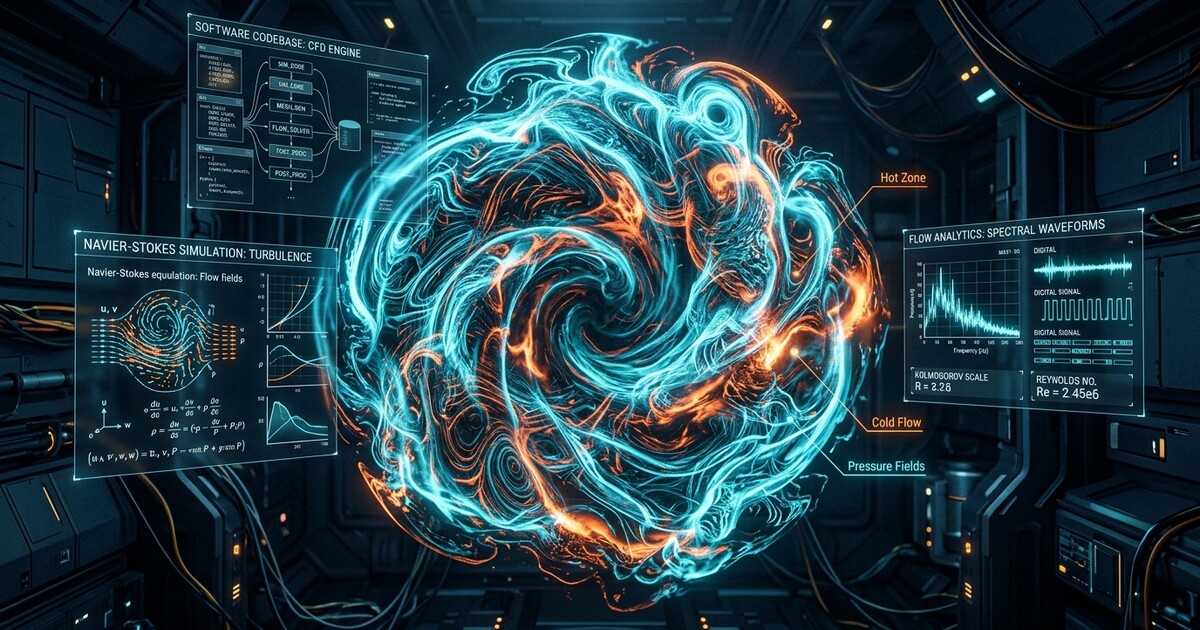
As far as I know, the mathematician Tristan Buckmaster and Levent Alpöge — an Anthropic employee, working in a personal capacity — had been working on a solution for the better part of a year, using Claude and Codex. OpenAI had wind of it. They scrambled a team, pointed their latest unreleased model at the problem with ten thousand concurrent agents and millions of dollars of compute, and snatched the result before Tristan and company could finish. OpenAI’s announcement came within hours of the pair’s own release, and Bubeck’s response to the accusations is its own reading experience.
The problem here is that Tristan and company used Codex to work on the problem, and they accuse OpenAI of using their prompts and their approach to crack it.
Unfortunately, I am not sure we will ever be able to determine how much OpenAI knew of their effort, how much of it they used in their attempt, or whether their model was trained on Tristan’s approach. OpenAI’s own statement says it best, in the way only a legal department can: they did not access their work, but they “cannot rule out” that de-identified data derived from their usage helped improve the models. Read that sentence twice.
My take: the novelty here belongs to Tristan and team. OpenAI should have approached them and offered their latest model to help finish the job, instead of scrambling their own team and pushing Alpöge off the podium. It would have been much better publicity — at the end of the day, it was OpenAI’s model that cracked the thing, even though the guy is an Anthropic employee. “An Anthropic mathematician solved a Millennium problem using our models” is the best advertisement OpenAI could never buy, and they traded it for a scoop and a PR fire.
It also brings AI work ethics into question. How can you trust a non-local model if it is going to be abused this way? Granted, 99% of user chats, I think, do not involve novel stuff. Personally, I will keep working with OpenAI models, because there is nothing in my sessions OpenAI would want. But it is still an ethical question, and we should expect AI companies to respect the attribution of novel ideas instead of trying to snatch them away.
Sabine’s exposé: some of the doom has an invoice attached
Finally: Sabine Hossenfelder’s latest exposé, I Was Offered Money to Tell You AI Will Kill Us, where she says she was approached by certain “parties” and offered money to talk badly about AI — to make doomsday videos about how it will take your jobs, pollute the planet, and so on. (She declined, and then dug into who else got similar offers. Worth watching.)
This is concerning because it leaves the public in a difficult state: who are we going to trust?
The upcoming Anthropic and OpenAI IPOs signal increasing tension with the existing corporate structure. AI is going to be disruptive, and there are incumbents who want to stop it from taking over their domains. That is understandable. But it also means we need to apply a discount when we encounter fear-mongering about AI development.
For example: today, an Anthropic employee resigned, citing concerns over AI. How can we trust this individual’s judgement if there is a possibility they are being paid to talk like that? I am not saying they were. I am saying Sabine’s video is the reason the question now has to be asked at all. That is the actual damage: not that one side is right, but that the signal-to-noise ratio of the whole conversation just dropped another notch.
Between the high-pass filter of social media and the sponsorship invoices of both camps, the honest signal is getting hard to hear. Keep your own counsel.
related entriesshared tags