The Heliobane trilogy, and the rest of gand.games
Gand's games now live at gand.games. A quick tour of the shelf, then a longer look at the Heliobane trilogy: a shmup, a metroidvania and a tactics game, set ten years apart, about a hive that eats stars and the people who have to live next to it.
In the State of Gand post I said games were moving to their own corner, and promised more “in a later update”. It is later.
gand.games is the new home. Its manifesto fits on a napkin: no ads, no tracking cookies, one price paid once, and games that get patched instead of abandoned. Its tagline is more honest: small games with unreasonable ambition. There are seven games on the shelf: one out, one a few weeks away, one free in your browser, and the rest in development.
A few more aren’t on the shelf yet, and two of them are most of this post. HELIOBANE turned out not to be one game. It is the first third of a trilogy.
The Heliobane trilogy
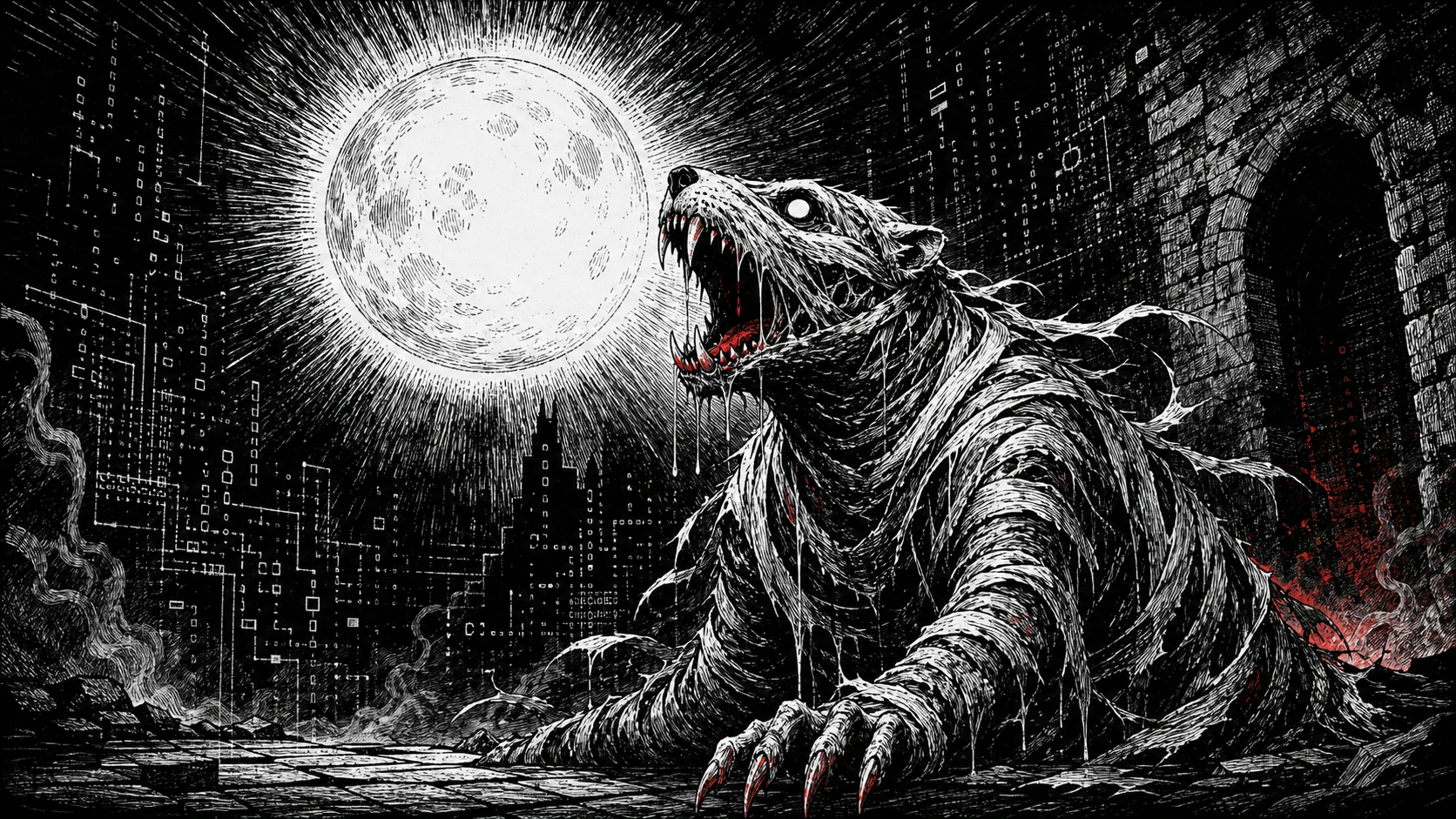
Three games, one universe, three genres, and one enemy: the Umbrine, a crystalline, half-organic hive that eats stars.
| HELIOBANE | FARSTRAND | THAWLINE | |
|---|---|---|---|
| Genre | vertical shmup | metroidvania | roguelite tactics with base building |
| In the spirit of | Tyrian, Xenon 2 | Axiom Verge | Into the Breach |
| Hero | Wren, a pilot | Hesper Lind, a cartographer | a wave of colonists |
| Scale | one ship | one person | one people |
| When | Year 0 | Year 7 | Year 10 |
| What you do with heat | burn it | freeze it | live with it |
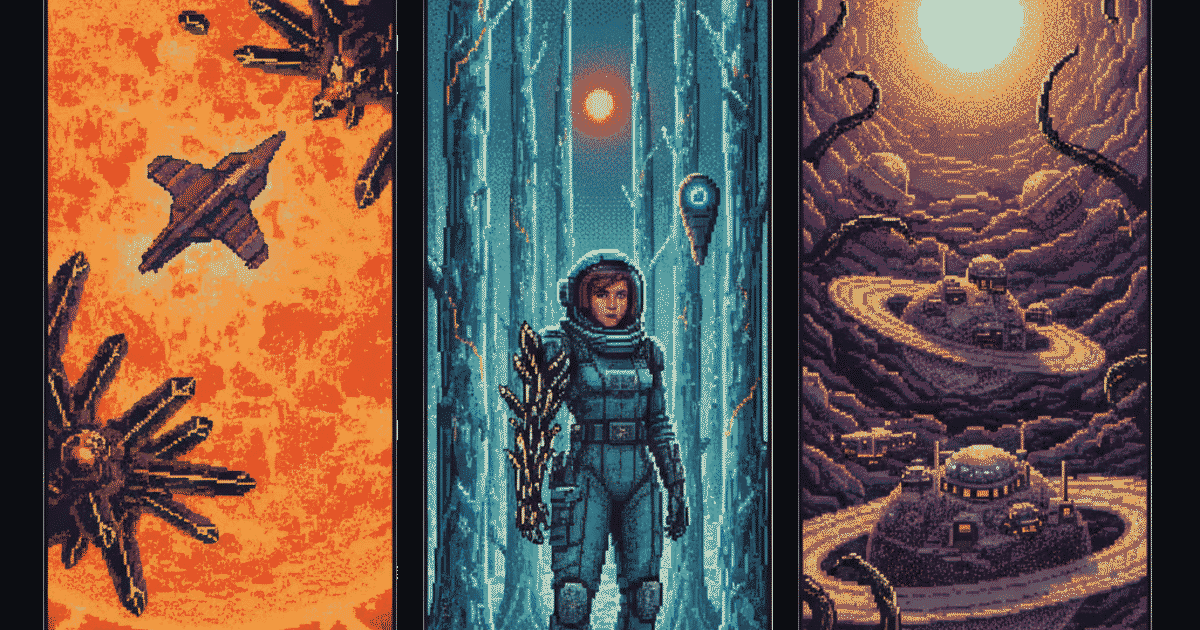
Years count from HELIOBANE. All three share one look, the Amiga one: low resolution, the same 32-colour master palette, tracker music, digitised speech. All three are built in Godot 4, and the two sequels target the Steam Deck from day one.
No spoilers below. Just enough to show the shape of it.
HELIOBANE (Year 0): burn it
Aurel is an old orange star with five inhabited planets and a thousand years of mining, trade and small wars behind them. Nobody looked at the sun. Then Project SOLACE drilled a siphon into it, and something asleep in its belly tasted refined energy for the first time.
That something is the Umbrine. It doesn’t conquer, it grows. In ninety days it took the Tharsis mining belt, the ocean moon Verdigris and the entire Concord battle fleet, which it didn’t destroy but wore, the way a hermit crab wears a shell.
At Solmarch Yards, one ship had spent eleven years under a tarp. HB-0 “Heliobane”: a gunship rated to fly inside a star’s corona and deliver exactly one weapon, the Solar Lance. Chief Engineer Oda Venn fuelled her, loaded the Lance and held the dock doors open long enough for her to launch:
“We built her to kill a star. We never thought we’d have to.”
The pilot is Ilse Varr, callsign Wren: a salvage runner from the Tharsis belt with two smuggling convictions and the best reflexes in the system. Sarcastic, frightened, and very, very good. Her guns were never meant for a war, so she strips better ones off the dead and buys the rest from Old Mott, who flies a patched-up salvage tug called the Magpie, turns up between stages whether you want him to or not, and calls her kiddo. He buys Aurum, the gold-glass residue the Umbrine leaves behind, and sells guns he definitely didn’t steal from the Concord armoury.
The game runs in three acts of five stages, each stage ending in a screen-filling Herald, the shepherd the Umbrine grows for every world it takes. Aurel goes inward, through everything the hive has already eaten, to the heart of the star. The Wake goes outward, after something that gets away, into the cold and the dark. Umbra goes down, to where it all started. I will leave it there.
Here is the trailer:
heliobane.gand.games has the rest, and a free demo is coming to Steam.
FARSTRAND (Year 7): freeze it
Seven years on, Aurel’s people need a way out, and the only roads between the stars are ones the Umbrine grew. The Concord calls them strands, and sends survey crews down them. The crews stop reporting back.
Hesper Lind is the cartographer on Survey Seven. Her ship comes off its strand wrong and crashes on Halm, a cold world around a red dwarf. She wakes in a cocoon of glass in a forest of glass. Her left arm is gone. In its place is an arm of black glass veined with gold, and it moves when she tells it to. She calls it the Graft, after the section of the Survey manual about grafting fruit trees.
The Graft moves heat, and that is the whole game. The hive’s flesh has three
states: sunfed (hot: it glows, grows and eats), flesh (warm: it
digests) and glass (cold: it keeps whatever it holds exactly as it was).
Freeze an enemy and stand on it. Overfeed it and it bursts. Thaw a wall, grow a
bridge, set it hard. Hesper also has a survey drone called Bob, shaped like a
plumb bob, whose readout occasionally says NO.
Glass forgets nothing, and the worlds on the strands are full of things the hive swallowed and never finished digesting. Some of them still talk. Someone from an earlier survey has a plan, and it is not a stupid one. And a certain trader is already waiting when she gets where she is going. “Took your time, kiddo.” He won’t say how he got there first.
My favourite detail: every survey wreck has the same torn recruitment poster on its bulkhead. Wren’s face, and FLY LIKE WREN. Mott, the first time he sees one: “She’d hate that poster, kiddo.”
Farstrand is in development. The first world, Halm, is playable in-house. No public site yet.
THAWLINE (Year 10): live with it
Three years later, the colonists go. A wave of arks comes down inside the shell of a dead star, under a young sun, and founds a colony called Venn’s Landing. The problem is in the title. The colony needs warmth to survive, and warmth wakes the hive.
Thawline plays like Into the Breach: small boards where every enemy shows its move a turn ahead, so losing is a mistake you can see, never a dice roll. On top of that is a base you build between fights, and when the hive raids the Landing, the buildings you built are the board you defend. A Wake meter tracks how awake the hive is, and every warm tile you leave burning pushes it up.
Each run is one wave of arks, and three peoples fight over what temperature the board should be:
- The Yard, dockworkers in armoured rigs. They don’t care about heat. They hold.
- The Grafted, colonists with arms like Hesper’s. They tame the hive and farm it. They want it warm.
- The Worn, who live in cold glass. They want everything frozen.
Thawline is at the proof-of-concept stage: three boards and the Yard, playable with a mouse or a pad. No site yet either.
How the three connect
Each game plants something the next one pays off. Without giving any of it away:
- A ship’s hull rating that matters more than it has any right to.
- A trader who always gets there first.
- A warning nobody wants to hear, left by people who didn’t listen to it either.
- An engineer whose name keeps turning up after she is gone.
- A few voices that carry across all three games, if you know where to listen.
Put together, the trilogy is one idea tried three ways. HELIOBANE burns the problem. FARSTRAND freezes it. THAWLINE has to live next to it. The scale grows at every step, from one ship to one person to one people, and the question shifts from can we kill it to what do we owe it.
How it got made
Fast, is the honest answer. HELIOBANE started on 24 September, yesterday, from a one-paragraph brief: a retro shoot ‘em up like the Amiga classics, Tyrian 2000 and Xenon 2 named outright. The name, the lore and the design document were written that morning. Farstrand’s brief was one paragraph too: same universe, different story, across several planets, should feel like Axiom Verge, Steam Deck from the start.
Thawline came from a question. With two games sharing a universe, I asked Claude what genre would make a third one fit. It suggested a colony survival builder, or Into the Breach-style tactics as a runner-up. I leaned towards the tactics, but not just fighting the hive: building a base, taming and farming the hive, and a third, unknown faction, something like StarCraft’s three races, only retro and small. The Worn were already sitting in Farstrand’s lore, and they were perfect for it.
AI generated some of HELIOBANE’s assets: artwork, voice lines, sound effects, in-game text and translations. The artwork was edited and fitted to the 32-colour palette. The soundtrack comes from a custom tracker built for agentic work, written by a model trained on a curated set of public-domain MOD music; if that sounds familiar, cozy-tracker was where I first tried this kind of machine-written tracker music. The look itself comes from somewhere older: if you have read me going on about what people still wring out of 1985 silicon, you know why it had to be 32 colours.
The rest of the shelf
Shorter entries, because the trilogy already took most of the room.
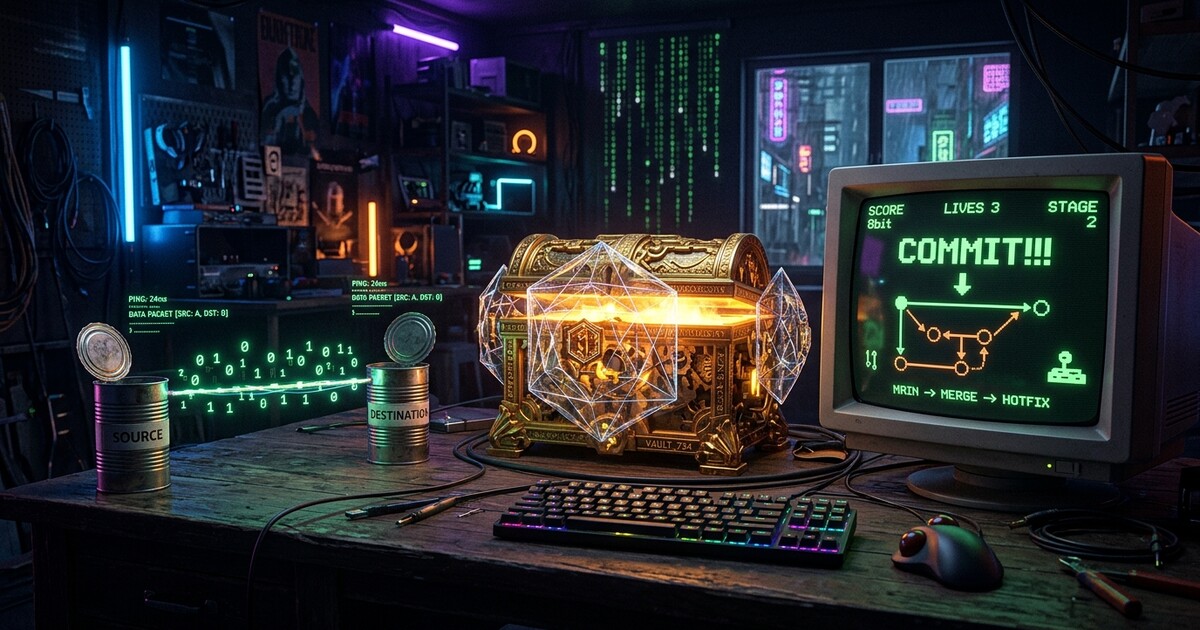
COMMIT!!!: a software-career sim where the legacy monolith is the final boss. Take the job, ship the commit, dodge the debt, and try to make rent before the anxiety makes you. Out now on Steam and Google Play for $9.99, in Godot, in 13 languages. I covered the launch in the last status update, and its phosphor green has already escaped into an Omarchy theme.
Studs Up! Win Ugly: a five-a-side football brawler. Recruit seven misfits, drag The Mincers through a ten-match pub-league season, and spend your opponents’ teeth on the club. Goals win matches, teeth pay the bills, the referee has his price and the injuries come home with you. Built in LÖVE2D, out 16 October on Windows and Linux, and you can wishlist it on Steam now. The last time I wrote about football it was a Süper Lig analytics site. This has fewer spreadsheets and more broken noses.
Aldith: a tarot roguelike. Aldith was the Reader of the Wheel: a Lord’s season ended when she laid the cards and told him so. One winter the eight Lords broke her deck across their halls so no ending would ever be read again, and put her out of the gate with forty pips. She comes back old, walks the year from Yule to Samhain, and reads for each Lord on his own terms: the Frozen Lord turns every Cup, the Child hears nothing above five. Tell him true and his relic trump comes back to her hand. Twenty-four trials, twenty-two trumps, one deck to make whole.
Intersection 17: a traffic-post bureaucracy sim. You are Sena Ri, marshal of the seventeenth crossing in the fictional Sunward People’s Republic of Soryang. Direct each car where it signals, salute the pennants without fail, fine the defective, or wave them through and pocket the difference. Then the second shift: rice, coal, medicine, and a curfew the alley doesn’t keep. Thirty days, several endings, one permanent record.
The Sublime Engine: an Ottoman steampunk point-and-click, set in an alternate 1930s where the Empire never fell. It reformed, industrialised and won the Great War. You are a Telegraph & Antiquities clerk handed the wrong parcel at Sirkeci Station, and inside is a cipher that indexes a machine said to predict revolutions. The bureaucracy is the puzzle: the stamp needs the form, the form needs the queue number, the queue number needs the stamp. There is always one way in. Coming in English and Turkish.
G-COPY: a small business sim inside a classic Amiga disk copier, made as a homage to X-Copy. You start with one drive, 512 KB of RAM, $40 and three blank disks, buy masters of imaginary games at the Saturday disk market, and beat copy protection with the right mode and a well-timed retry. It is free and runs in your browser right now. Anyone who has spent time around the retro scene will recognise that copier screen instantly.
Not on the shelf yet
Two more are further along than their lack of a website suggests.
Moonwyrm: turn-based dragon-keeping strategy with short, lethal, real-time arena fights, a deliberate cross of two Amiga classics from 1990 and 1991. You are a Keeper in a tower at the edge of the Pale, a land lit by a moon that is slowly going dark. In your vault sit the eggs of the Moonwyrm, the mother of every dragon, and every egg is a life you spend one of two ways: hatch it into a Moonsworn, a scaled half-human soldier you send out to loot, conquer and die for you, or raise it as a dragon, bred for its bloodline and milked for the breath that fuels your alchemy. Three rival Keepers want the same thing you do: breed an Heir of all four bloodlines and walk it through the Moongate under a full moon before the moon goes out. A run takes about an hour, and it can already be won and lost.
Pharmakon: run a living apothecary where every patient is a puzzle, every herb changes with how you prepare it, and the back room slowly turns medicine into alchemy. People come in with complaints, and “something for a headache” is an opening statement, not an order ticket: you ask, examine, decide what is actually wrong, then grow, cut, grind, steep or distil the answer, and find out later whether it worked. The plants are named after real herbs; every effect in the game is fiction. It is hand-drawn and playable start to finish, as a fortnight or a full working month.
One consistent bad idea
gand.games describes the studio as “various genres, one consistent bad idea: do all of it ourselves.” One person, zero meetings. The career sim, the pub brawler, the tarot deck, the traffic post, the Ottoman cipher, the disk copier, the dragon tower and the apothecary each get their turn.
This week, though, it is the trilogy: a pilot, a cartographer and a colony, ten years of living next door to a hive that eats stars, and a trader who calls everyone kiddo. HELIOBANE’s demo is coming to Steam first, and heliobane.gand.games has the rest. The other two will get their own sites when they have earned them.
Right. Let’s go kill a sun.
related entriesshared tags